

























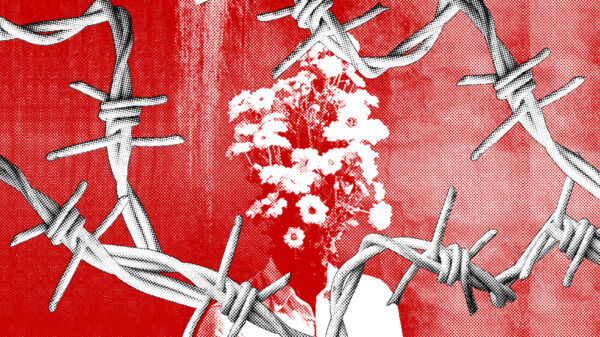














It is time for our society and institutions to start an open and honest debate on the respect for human rights by law enforcement officers. Otherwise, we risk facing a further increase in distrust toward law enforcement institutions, as well as an erosion of legal certainty and the rule of law in the Republic of Kosovo
For some time now, the situation regarding the respect and protection of citizens’ rights by the institutions called upon to do so has degraded. Worse still, this decline has taken on increasingly alarming forms and proportions. All too often, the system falls short in investigating police abuse efficiently and objectively. This failure leaves victims without justice and deepens public frustration with law enforcement. The culture of impunity seems to have become institutionalized, and this, to a large extent, has encouraged violators to continue their behavior without fear of criminal prosecution or punishment.
Kosovo Police officers, like the prosecutors and judges who together form the backbone of the justice system, must carry out their duties with total integrity and professionalism. The use of force, including proportional use, is strictly defined by laws and operational regulations of the Kosovo Police.
This decline in standards isn’t random—it’s driven by weakening police transparency and lack of attention in recent years from organizations mandated with overseeing and monitoring the work of the police. On the other hand, prosecutors and judges, mainly due to institutional ties, are less inclined to investigate or try police officers when they are potential perpetrators of criminal offenses.
Credible regional and international organizations have repeatedly called for capacity building among all institutional actors (law enforcement) to meet legal requirements and standards aimed at preventing and combating inhuman, degrading, and humiliating treatment of persons under their authority or responsibility. This capacity building must be implemented through comprehensive and well-structured programs by responsible institutions and through proven expertise.
Likewise, efficient oversight and assessment of the situation on the ground must be ensured. Under these circumstances, institutional reform seems more than necessary. That should include, among other things, establishing oversight mechanisms and strengthening existing ones over law enforcement authorities. Addressing allegations of ill-treatment requires not only a genuine investigation of individual cases but also an institutional approach that guarantees prevention, accountability, and continuous respect for human rights standards.
Complaints and applicable standards
This week, Kosovar and Serbian media reported extensively on allegations regarding the ill-treatment of war crimes suspect Nenad Rashkoviq by the Kosovo Police on August 11, 2026, near Zubin Potok. It is important that responsible institutions act in accordance with the highest standards of effective investigation and accountability. The case has drawn significant public and media attention, generating various political and institutional reactions in both Kosovo and Serbia.
At this stage, while investigations are still ongoing and their results have not been made public, it is vital that every allegation of excessive use of force or ill-treatment be handled professionally, independently, and impartially by competent authorities. The role of the Police Inspectorate of Kosovo (IPK), which has already initiated investigative procedures regarding the case, is essential for clarifying the factual circumstances and determining potential liability.
Furthermore, the fact that the case has become the subject of political discussions and statements beyond the investigative process makes it even more important for Kosovo’s institutions to provide a prompt, transparent, and fact-based response. Only an effective and impartial investigation, conducted in compliance with legal requirements and widely accepted objective standards, can contribute to clarifying the claims, strengthening public trust, and avoiding rushed interpretations of the nature and circumstances of the event.
When allegations of ill-treatment are raised publicly or officially by victims or their legal counsel, institutional duty doesn’t depend on a formal criminal complaint. Instead, competent authorities are immediately required to launch a prompt, independent, and effective investigation under Article 3 standards of the European Convention on Human Rights (ECHR). To uphold transparency and accountability, the IPK—along with the State Prosecutor and the courts when required—must strictly adhere to the highest investigative standards for these claims: adequacy, thoroughness, impartiality, independence, promptness, and public oversight.
Reported cases and state obligation
Data from the Police Inspectorate of Kosovo show that complaints regarding ill-treatment during the exercise of official duty and abuse of official duty, position, or authority continue to constitute the most frequent categories of complaints against police officers. In 2025 alone, PIK received 727 complaints concerning various suspected criminal offenses, of which 162 cases pertained to ill-treatment during the exercise of official duty, 59 to intimidation, 17 to bodily injury, and 18 to assault. These data points reflect critical human rights concerns and underscore the necessity of reinforcing police oversight and accountability mechanisms.
The Criminal Code of the Republic of Kosovo has designated ill-treatment during the exercise of official duty as a specific criminal offense. Likewise, institutional mechanisms have been established, and all necessary procedures have been laid out to undertake investigative actions and prosecute such offenses.
Under the provisions of the European Convention, which is a directly applicable international instrument in the Republic of Kosovo, states have a procedural obligation stemming from Article 3 of the Convention to conduct an effective investigation based on credible allegations that a person has been severely ill-treated, or when authorities have reason to suspect that such treatment has occurred.
In this regard, the European Court of Human Rights has consistently emphasized that “…where an individual raises an arguable claim that he has been seriously ill-treated by the police or other such agents of the State unlawfully and in breach of Article 3, that provision, read in conjunction with the State’s general duty under Article 1 of the convention to ‘secure to everyone within their jurisdiction the rights and freedoms defined in … [the] convention,’ requires by implication that there should be an effective official investigation.” This standard transforms an effective investigation from an institutional choice into a direct legal obligation of the state, aimed at identifying facts, establishing individual responsibility, and ensuring accountability for potential human rights violations.
Furthermore, credible international and European mechanisms—particularly the Council of Europe’s Committee for the Prevention of Torture (CPT) and the United Nations Special Rapporteur on Torture—pay special attention to the treatment of persons deprived of their liberty, the prevention of ill-treatment, and the accountability of law enforcement officials. Through their visits, monitoring, reports, and recommendations, these mechanisms have consistently highlighted the importance of prompt, independent, impartial, and effective investigations into any credible allegation of ill-treatment. For this reason, the institutional handling of such cases in Kosovo should not be viewed merely as a matter of individual officer responsibility but rather treated as an indicator of the state’s compliance with its obligations to protect human rights, prevent impunity, and guarantee institutional accountability. As a result, the institutional response to such matters in Kosovo must be evaluated not simply as an issue of personal officer responsibility but as a vital test of the state’s fulfillment of its obligations to safeguard human rights and enforce institutional accountability.
Translated by AI and reviewed by an editor.
Author