
Montenegro’s EU Journey: Lessons for the Western Balkans


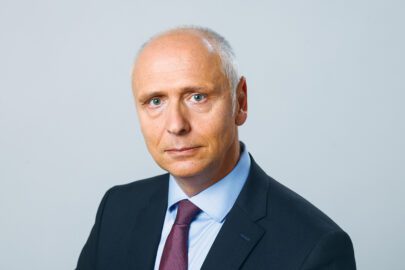
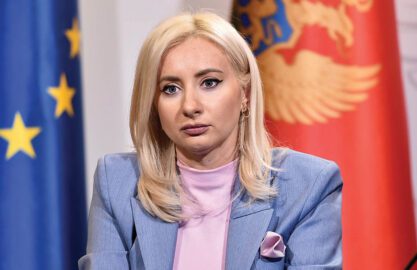
Interview with Maida Gorčević, Montenegro’s Minister of European Affairs
Montenegro’s progress reflects a combination of strong political will and substantial work on reforms. We have followed the standards and methodology established by the European Commission, while also drawing on expertise from EU Member States. We have benefited from favourable momentum for enlargement at the European level, as well as political momentum within Montenegro.
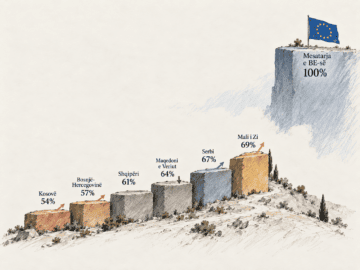
Montenegro is leading the Western Balkans in the race towards European Union membership, offering valuable lessons for other countries in the region. Having provisionally closed 21 of the 33 negotiating chapters, the country is aiming to complete accession negotiations by the end of 2026, with EU membership targeted for 2028. But beyond legislative reforms, the real challenge is preparing businesses for the opportunities and competitive pressures of the Single Market. This is a challenge facing businesses across the Western Balkans, which must adapt to demanding EU standards while investing in new technologies, production processes, workforce skills and certification. Croatia’s experience shows that this transition requires not only financial resources, but also access to information, technical assistance and institutional support, particularly for smaller companies. For the region, the question is no longer simply when countries will join the EU, but whether their businesses will be ready to compete when they do.
In an interview with Monitor, Maida Gorčević, Montenegro’s Minister of European Affairs, shares her country’s experience in advancing the accession process and preparing its economy for EU membership. She discusses the challenges facing businesses, the measures being taken to support their transition, and the potential benefits of greater access to European markets. Gorčević also highlights the importance of regional cooperation, stressing that Montenegro’s progress can open new opportunities for neighbouring economies and contribute to the European integration of the Western Balkans as a whole.
Montenegro is currently the Western Balkan country closest to EU membership. How is the accession process progressing, when do you expect Montenegro to join the EU, and what has enabled the country to advance ahead of its regional peers?
So far, Montenegro has closed 21 of the 33 negotiating chapters. I believe this represents a significant achievement, not only for Montenegro but also for the other candidate countries, as it demonstrates that the EU enlargement process can deliver tangible results.
Montenegro’s progress reflects a combination of strong political will and substantial work on reforms. We have followed the standards and methodology established by the European Commission, while also drawing on expertise from EU Member States. We have benefited from favourable momentum for enlargement at the European level, as well as political momentum within Montenegro.
In less than three years, we have managed to obtain IBAR ( Interim Benchmark Assessment Report) and close 18 negotiating chapters, bringing the total to 21.
Our objective is to close all remaining chapters by the end of 2026. Achieving this would demonstrate that enlargement can be a success both for the European Union and for candidate countries.
Beyond the formal negotiations and the adoption of EU legislation, how prepared are Montenegrin businesses for EU membership?
EU accession is not simply about closing negotiating chapters. It involves changing legislation, strengthening administrative capacity and preparing society as a whole for membership.
This process affects not only public administration but also businesses and citizens. That is why we are focusing on communication with both groups.
We are working closely with the EU Delegation to explain the opportunities that membership will create for businesses, but also the challenges they will face.
Once Montenegro joins the European Union, it will become part of the EU’s external border. This also means that Montenegro will no longer be part of CEFTA (Central European Free Trade Agreement).
Consequently, our trade relations with other countries in the region will change, particularly regarding imports and exports.
This is especially important for Montenegrin companies whose activities depend heavily on regional trade. We need to help them understand the implications and identify new opportunities.
We are in constant communication with the Single Market Academy and are working with experts who can support our businesses in preparing for the Single Market. Together with our chamber of commerce and business representatives, we are organising a series of meetings across Montenegro’s municipalities to explain the changes and identify companies’ specific concerns.
Many of the necessary standards are already being introduced through the negotiating process, including legislation, standardisation, phytosanitary requirements and laboratories, and border-related procedures. This is the first step. The second is ensuring that businesses are genuinely prepared to operate under these conditions.
I believe Montenegro will be fully prepared by 2028, but this requires open communication about the challenges that remain.
Standards
Many of the necessary standards are already being introduced through the negotiating process, including legislation, standardisation, phytosanitary requirements and laboratories, and border-related procedures. This is the first step. The second is ensuring that businesses are genuinely prepared to operate under these conditions.
Have you conducted any assessments or surveys to establish how prepared businesses are today? To compare, many Albanian companies are concerned about the investment costs associated with meeting EU standards, particularly in the current economic environment. Does Montenegro have any plans to provide financial support to businesses?
We are investing in several areas. The first concerns the business and investment environment. Just some days ago, we held an investment conference here, organised in cooperation with the European Commission. We are also actively promoting Montenegro within the European Union to attract more European companies and investment. This is important for our domestic businesses as well.
The second area is investment in employees and the labour market. The Prime Minister has outlined measures concerning higher salaries, which are also intended to help businesses address labour shortages and strengthen their workforce.
The third, and perhaps most important, area is project preparation. We are helping companies prepare projects that will allow them to access European Union funding once Montenegro becomes a member. We are already working on this through IPA programmes and cross-border cooperation projects.
Our objective is to provide companies with access to qualified consultants so they can develop their own projects. At the same time, we are preparing projects at the national level.
At present, the government cannot provide certain forms of direct financial support because of the restrictions imposed by EU competition and state aid rules under Chapter 8[1] of the accession negotiations. However, we can support businesses in other ways: by helping them develop quality projects, adopt a strategic approach, strengthen their workforce and establish connections with European companies and the European Commission.
Preparing for future access to EU cohesion funds is particularly important.
Are companies already preparing independently? Do you have an assessment of whether they are ready for membership or will need to make substantial additional investments over the next few years?
Yes, some companies are already preparing independently. However, we are currently focusing on the first stage, which is providing information and establishing communication with businesses.We are organising panels, open debates and discussions because we want to understand their concerns directly. We also invite experts from the European Union to address specific questions.
One of the most important challenges concerns tourism, particularly the alignment of Montenegro’s visa policy[2] with EU requirements. We need to sit down with hotels, travel agencies and other tourism businesses to explain what these changes will mean for their operations once Montenegro joins the EU.
At the same time, Montenegro needs to develop a strategy to strengthen its visibility within the European Union.
All these issues are connected. We must support businesses, but we must also listen carefully to their concerns. I would not say that our businesses are fully prepared today. However, we are working towards that objective step by step.
The first stage is communication and identifying the questions and challenges businesses face. We will then address these issues one by one.
What will be the main benefits for Montenegro’s economy once the country joins the European Union?
Access to the EU Single Market represents a tremendous opportunity for Montenegrin businesses. It will also create opportunities for the wider region. Montenegro’s geographical proximity to Albania, for example, means that companies in both countries could benefit from stronger economic connections once Montenegro becomes part of the Single Market.
For Montenegro, EU membership should create additional investment opportunities. These investments could stimulate domestic production, particularly in agriculture, allowing our producers to increase output and expand sales. Everything is interconnected.
I am confident that the Single Market will be extremely important, not only because it will allow our companies to expand into European markets, but also because it will encourage stronger business connections and investment within Montenegro itself.
Single Market
I am confident that the Single Market will be extremely important, not only because it will allow our companies to expand into European markets, but also because it will encourage stronger business connections and investment within Montenegro itself.
How do you see economic cooperation among Western Balkan countries evolving as they move towards EU membership? How can the region strengthen cooperation, and what benefits could a common market bring?
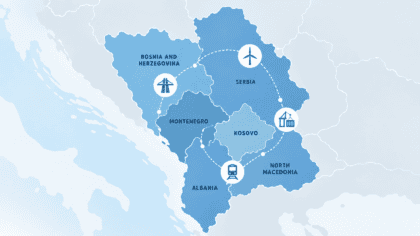
The European Union’s Growth Plan for the Western Balkans is a very good example of how the European Commission can encourage regional cooperation through practical initiatives. It has brought us together to work on several important projects. We have cooperated through CEFTA and the Green Lanes initiative. We are now also working on “Roam Like at Home”.
These initiatives allow citizens and businesses to experience some of the benefits of European integration even before their countries become EU members.
Such concrete benefits are extremely important for the entire region. They also demonstrate why we all want to become part of the EU Single Market. The Single Market is important for our businesses and for economic growth, both in individual countries and across the Western Balkans as a whole.
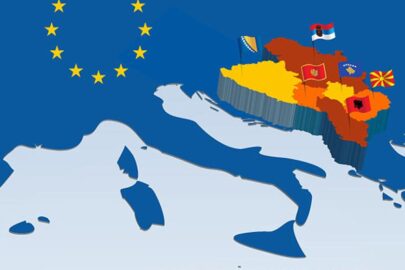
Ultimately, Montenegro wants to see the entire region become part of the European Union.
[1] Chapter 8 – Competition Policy: Covers EU rules on competition and state aid, which regulate government financial support to businesses to prevent market distortions. State aid is permitted under specific conditions.
[2] As part of its EU accession process, Montenegro is aligning its visa policy with EU rules, introducing visa requirements for visitors from certain countries that previously enjoyed visa-free entry. These changes may affect tourism flows and require adjustments by local businesses.
Ky është artikull ekskluziv i Revistës Monitor, që gëzon të drejtën e autorësisë sipas Ligjit Nr. 35/2016, “Për të drejtat e autorit dhe të drejtat e lidhura me to”.
Artikulli mund të ripublikohet nga mediat e tjera vetëm duke cituar “Revista Monitor” shoqëruar me linkun e artikullit origjinal.