
Western Balkans: Economic Growth Is Holding Up, but Productivity and Exports Remain Weak



The Western Balkans are expected to see economic growth accelerate from 2.6% in 2025 to 3.1% in 2026 and 3.4% in 2027, but the region continues to face a fundamental challenge: growth is being driven largely by consumption and investment, while productivity, exports and job creation are struggling to keep pace. Despite growing trade integration, only 23–39% of new export relationships survive beyond their first year, while employment declined slightly in the first half of 2026.
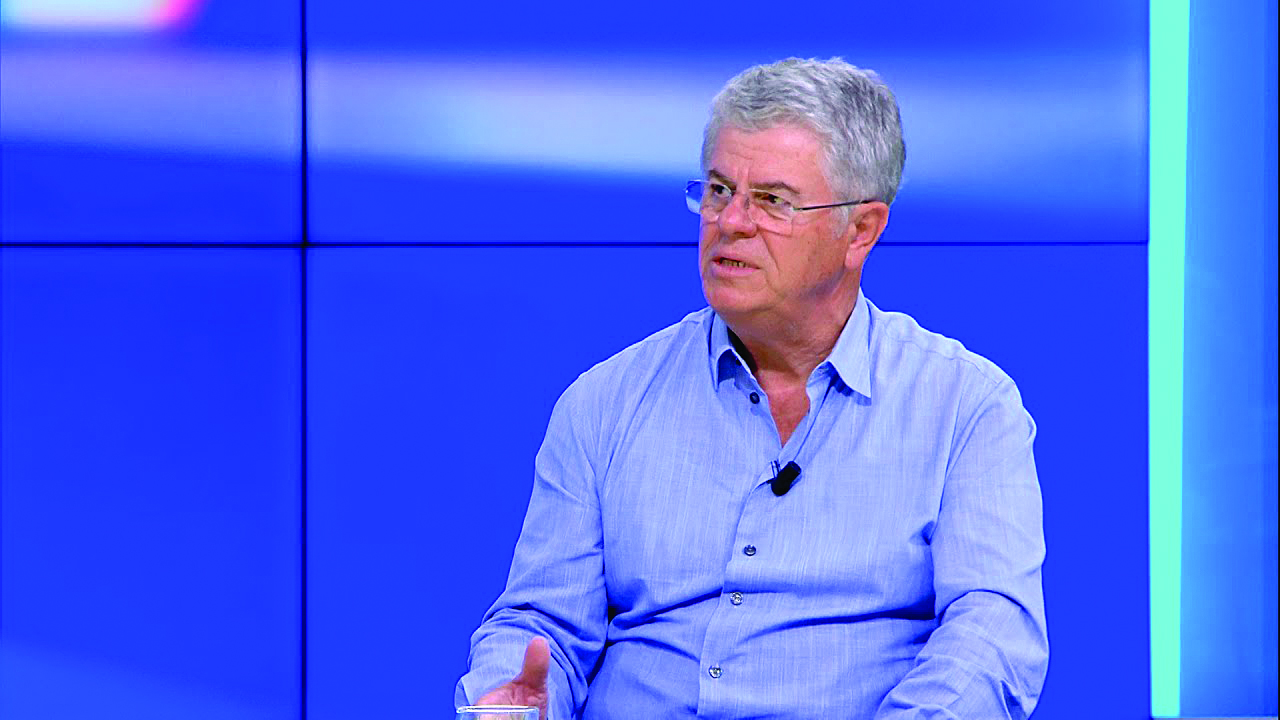
According to Angella Faith Montfaucon, Senior Economist at the World Bank for Albania and the Western Balkans, the region needs to develop a more competitive economy capable of generating higher-value exports and better jobs. Although trade in goods and services represents 107% of regional GDP, World Bank estimates suggest that goods exports could be 35–55% higher.
In an interview for “Western Balkans Monitor”, the magazine’s new section dedicated to the economies of the Western Balkans, Montfaucon discusses the obstacles holding back the region’s economic convergence with the European Union, from weak productivity and rising labour costs to trade barriers, demographic pressures and shortages of skilled workers. She also highlights the potential of deeper regional integration and reforms to improve competitiveness, strengthen export performance and accelerate income convergence with the EU.
- Albania has maintained strong growth for several years, supported largely by tourism, services, and construction. In the World Bank’s view, how can the country broaden its growth model and develop a more diversified export base that creates productive, higher-value jobs?
The key question for Albania is no longer simply how to generate growth, but how to make that growth broader, more productive, and create better jobs. Tourism and other services will remain important drivers of the economy, but Albania also has an opportunity to diversify its export base and help more firms move into higher-value activities and compete internationally. Today, travel accounts for almost 70 percent of services exports, while footwear and apparel represented about 37 percent of goods exports in 2025. Fewer than 10 percent of firms trading in merchandise both import and export, yet they generate around 90 percent of goods export value. This tells us there is considerable room to broaden the export base.
Diversification does not mean choosing the next winning industry. It means creating an environment where more Albanian businesses can become competitive, grow, enter export markets, and stay there. This means reducing restrictions on key services such as transport, finance, professional services, ICT; addressing non-tariff measures; improving logistics at ports and border crossings; and strengthening skills, quality infrastructure, and links with foreign investors.
These reforms can make a real difference. Our analysis suggests that reducing restrictions on key services could raise the level of GDP by 9.8–11.0 percent over the medium run and add about 33,000 jobs. A targeted review of non-tariff measures on goods could add about 8.8 percent to GDP and 29,000 jobs. The same reforms would also lift exports, by about 7 percent under the goods reform and 10 percent under the services reform. Investment would rise by about 10 percent under either reform.
Ultimately, this is about turning Albania’s strong growth into more opportunities for businesses, more productive and higher-value jobs for people, and a more diversified and resilient economy.
- The report projects growth in the Western Balkans rising from 2.6 percent in 2025 to 3.1 percent in 2026 and 3.4 percent in 2027. What is behind the pickup, and how much of it rests on the region’s own strengths rather than on favorable external conditions?
The pickup is driven mainly by domestic demand. Consumption is expected to add 2.7–2.8 percentage points to growth each year in 2026–28. Investment is expected to add 1.1–1.2 points, supported by infrastructure, energy, tourism, housing, and EU-financed projects. In 2026, the acceleration also reflected Serbia’s stronger recovery and upward revisions in Montenegro and North Macedonia. Net exports, by contrast, are expected to subtract 0.5–0.7 points a year. The region has shown real resilience. Growth now relies more on services exports and domestic demand, and less on manufacturing exports alone. As a result, weaker European industry did not trigger an economy-wide contraction. However, the outlook also assumes better external conditions: the disruption to Gulf crude oil exports largely abates in 2027, and euro area growth rises from 1.0 to 1.3 percent. The region grew about 2 points faster than the EU in 2026, but that mainly reflected weaker EU growth. Consumption financed by wages, transfers, remittances, and credit also does not, by itself, expand productive capacity.
- The region’s main trading partners are growing weakly, energy markets remain volatile, and geopolitical uncertainty is high. What do you see as the biggest risks to the outlook, and how well placed is the region to absorb another shock?
The region has shown considerable resilience, but we should also be clear that the outlook remains exposed to potential downside risks both domestically and abroad. The Western Balkans are closely connected to European and global markets, so developments outside the region can quickly affect growth at home.
A weaker recovery in Europe, for example, would weigh on goods exports from Bosnia and Herzegovina, North Macedonia, and Serbia, while also affecting tourism in Albania and Montenegro. A prolonged conflict in the Middle East or renewed disruption to European energy markets could keep energy costs high and delay disinflation. Trade fragmentation, higher food prices, and tighter global financial conditions add further uncertainty.
At the same time, the region has important buffers. Banks are well capitalized, with capital averaging 19.3 percent of risk-weighted assets, and bad-loan ratios are at historic lows. Public debt is also less exposed to currency and interest-rate risks than it was a decade ago. But these buffers should not be taken for granted. Fiscal deficits are widening, and the current regional account deficit has risen to 7.1 percent of GDP. Repeated shocks can gradually weaken these buffers, particularly in economies with large external deficits or significant refinancing needs.
So, the region is in a stronger position to absorb shocks than it was in the past, but sustaining growth will depend not only on a more favorable external environment. It will also require sound fiscal management and continued reforms at home to strengthen resilience and productive capacity.
- What would need to change for the region to converge faster and to close the income gap with the EU significantly faster?
High-income status is now within reach for the leading economies. In 2025, Montenegro’s income per person was 98 percent of the high-income threshold, Serbia’s 94 percent, and Albania’s 84 percent. But that threshold, global national income (GNI) per capita, is a global classification, not a measure of convergence with Europe. Measured against the EU average using the same measure, the same economies stood at only 32, 31, and 28 percent of the EU average, respectively. Without stronger productivity growth, convergence with average EU living standards will remain a multi-decade process.
Faster convergence would require five shifts: stronger productivity growth, higher labor force participation, better human capital, more effective investment, and deeper integration into higher-value segments. The potential gains are significant. A recent World Bank study estimates that, if misallocation of labor and capital in manufacturing were reduced to levels in advanced European economies and the United States, productivity could be nearly 40 percent higher in the four Western Balkan economies with available firm data. The same study estimates that goods exports could be 35–55 percent higher if the region traded at the levels expected for a typical upper-middle-income economy with similar characteristics. Faster convergence will depend on translating investment, talent, and closer integration with Europe into higher productivity and better jobs.
- Economic growth has held up better than expected, yet employment growth has weakened and job creation has lost momentum. Why isn’t stronger growth translating into more jobs, and what does this tell us about the region’s labor markets?
Part of the explanation lies in the changes taking place in the region’s labor markets. Working-age populations are shrinking, populations are aging, while emigration and persistent skills mismatches are making it harder for employers to find the workers they need. We are already seeing some of these pressures. Regional employment fell by 0.1 percent in the first half of 2026, or about 5,000 fewer jobs than a year earlier, as gains in construction and services were outweighed by losses in agriculture and industry. Unemployment fell to 10 percent, but in Serbia and Albania this mainly reflected people leaving the labor force rather than finding jobs.
Looking ahead, labor supply could become an even greater constraint. Youth unemployment remains more than twice the overall rate in most economies, and without higher participation or slower emigration, the region could be short more than 190,000 workers within five years, equivalent to about 2.5 percent of its labor force. Our simulations for Albania show what is possible. Reducing trade costs could raise real wages by about 6 percent for both skilled and unskilled workers over the medium run.
So, the challenge is not only to create more jobs, but also to bring more people into work, better match skills with employers’ needs, and create opportunities that can help retain workers in the region.
- Real wages have continued to rise across much of the region, but productivity growth has lagged behind, putting pressure on unit labor costs. Is this becoming a competitiveness challenge for the Western Balkans, and what needs to happen to ensure wage growth is supported by stronger productivity gains?
Rising wages are positive for workers and living standards. The challenge is to make sure productivity rises alongside them. In the first half of 2026, real wages increased by 7.3 percent in Serbia and 6.3 percent in Albania, followed by 4.8 percent in Kosovo, 4.6 percent in Bosnia and Herzegovina, and 3.4 percent in North Macedonia. Productivity, however, has not kept pace in most economies, while higher minimum wages are adding to these pressures. If that gap persists, it could weaken competitiveness, squeeze profit margins, or keep inflation elevated, particularly in labor-intensive sectors. The answer is not lower wages, but stronger productivity growth.
That means investing more effectively in technology, skills, and tradable activities, reducing trade costs, and helping firms become more productive and competitive. Higher labor force participation, particularly among women and youth, and training that better matches the skills employers need are also important. Ultimately, rising wages are most sustainable when they are backed by rising output per worker.
- Trade in goods and services now amounts to 107 percent of GDP in the Western Balkans, above the EU average. Many would view that as a success story. What does this headline figure fail to capture?
Part of that reflects small domestic markets and duty-free access to the EU. The headline figure does not show how long export relationships last. Each year, around 60 percent of export relationships are new. But only 23–39 percent survive their first year, and just 1–4 percent reach year five. Net exports subtracted from growth in every Western Balkan economy in 2026. Estimates also suggest the region’s goods exports could be 35–55 percent higher at levels typical of comparable economies. Integration into global value chains is also relatively shallow when measured as a share of GDP. So, the next step is not to only trade more. It is about helping firms stay in export markets longer, move into higher-value activities, and become more deeply integrated into regional and global value chains. The headline figure captures the volume of trade; the real question is how much lasting value that trade creates. The report shows there is potential for trade to contribute more to growth and jobs.
- Tariffs are already relatively low, only about 6 percent, but the report finds costs behind them are higher. How do these costs affect businesses? Do these costs show up in what people pay in shops, and in the services they use?
The ranking is clear. Tariffs average 6.2 percent. Non-tariff measures on goods, such as standards, testing, inspection, and certification requirements, add the equivalent of 10.2 percent. Restrictions on services supplied through a local presence are equivalent to 17.3 percent. Restrictions on services supplied across borders are equivalent to 29.3 percent. For businesses, these costs are concrete. In Albania, Kosovo, and Serbia, firms that use imported inputs spend 12–14 percent of import value on compliance. That is roughly double what firms in comparable EU economies report. Exposure to these import requirements is also associated with exporters exiting markets sooner.
Where lower costs have been achieved, households and businesses benefit. For example, Albania’s entry into the Single Euro Payments Area (SEPA) is expected to save businesses close to €350 million a year in transfer fees. Our simulations for Albania suggest If Albania closed half the gap to the best regional performer in services trade restrictions, household welfare could rise by up to 9.9 percent over the medium run. Halving the cost of non-tariff measures on goods could raise household welfare by 8.0 percent. Most of the welfare gains from services reform would come from accommodation and food services and from wholesale and retail trade. These sectors’ costs feed into everyday prices across the economy.
- The report finds that firms in the Western Balkans are generally successful at entering export markets but often struggle to remain in them. Why is export endurance such a challenge, and what would help a small company stay in export markets?
The good news is that firms in Albania and across the region are good at finding new markets. Customs data for five economies, including Albania, show that 57–62 percent of export relationships are new each year. The challenge is staying in those markets. Only 23–39 percent of new relationships survive their first year, and just 1–4 percent reach year five. Firms keep paying the cost of entering markets without building the scale that brings better jobs.
Across the region, non-tariff measures (NTMs) on goods, such as standards, testing, and certification requirements, cost the equivalent of 10.2 percent. Restrictions on services cost even more, and services restrictions 17.3–29.3 percent. That is almost three to five times the average tariff. Firms depend on these services as inputs. These costs affect whether firms survive. Firms exposed to NTMs on their imported inputs have survival rates 12–17 percentage points lower between the second and fourth years of exporting. Most firms that both import and export across the region are exposed, roughly 60–90 percent of them, yet they generate most of the region’s exports.
The evidence points to what helps firms stay. Firms that start with larger export values tend to survive longer. So do firms that sell several products and serve several destinations. Firms that also import input have a first-year survival rate of 37 percent, compared with 28 percent for firms that only export. Governments can help by making border procedures predictable and by reducing unnecessary compliance costs. Cheaper payments also matter for small firms. In SEPA corridors, the cost of a €5,000 business transfer fell from about 0.7–0.8 percent to 0.07–0.08 percent.
- Regional initiatives such as the Common Regional Market aim to reduce barriers and improve economic integration. What can regional cooperation achieve that individual countries cannot accomplish on their own?
Some of the agenda is within each government’s own control. Countries can act on this unilaterally, for example by reviewing the regulations behind its non-tariff measures (NTMs) and services trade restrictions, and by focusing logistics reform on its main ports and crossings. Across the region, many such reforms could in principle be implemented within one to two years. They include an inventory of NTMs, with an inter-ministerial committee to update it. They also include risk-based inspection, electronic certificates, and a review of licensing and local-presence rules in services.
Some reforms only work if neighbors act together. One country cannot unilaterally make its certificates, laboratory results, or trusted-trader status valid across the border. That requires mutual recognition, such as the recognition of authorized economic operators agreed in October 2024. The same applies to Green Lanes at all border crossings, permit-free road haulage, and recognition of professional qualifications.
The next generation of trade reforms are the focus of this edition. Regional cooperation works best alongside domestic reform and EU integration. These steps also matter for regional and EU integration. Mutual recognition with neighbors, and recognition by the EU, both require domestic standards, inspection, and accreditation systems to be in place. Governments that move first can therefore shorten the path to regional and EU integration. Those same steps also prepare them for recognition by the EU, which absorbs most of the region’s exports.
Ky është artikull ekskluziv i Revistës Monitor, që gëzon të drejtën e autorësisë sipas Ligjit Nr. 35/2016, “Për të drejtat e autorit dhe të drejtat e lidhura me to”.
Artikulli mund të ripublikohet nga mediat e tjera vetëm duke cituar “Revista Monitor” shoqëruar me linkun e artikullit origjinal.