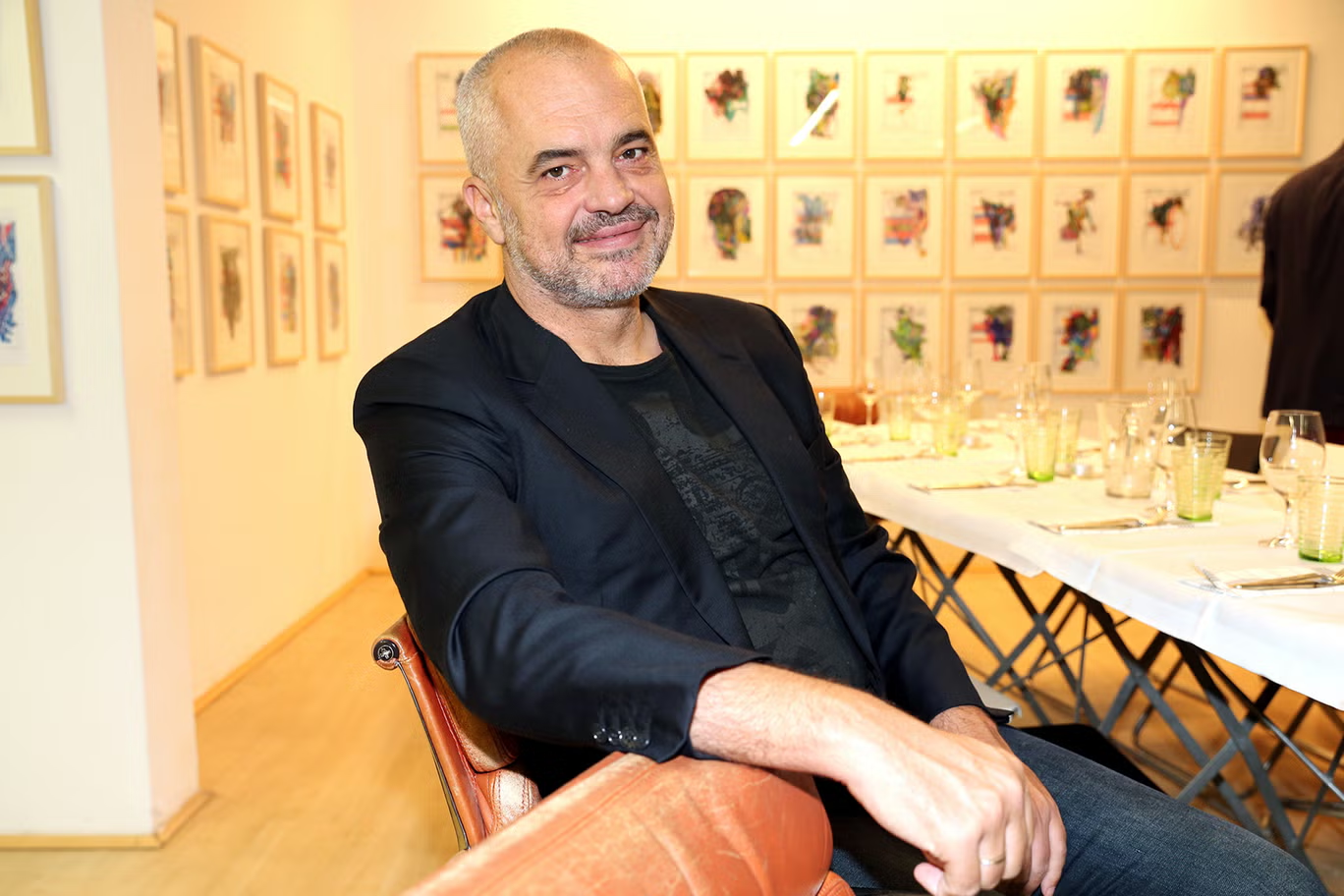
In an interview with the British newspaper The Independent, Prime Minister Edi Rama spoke about the protests in Albania, opposition to the tourism project on the island of Sazan, dissatisfaction over the rising cost of living and corruption allegations.
Commenting on the protests, which the newspaper describes as among the largest since the end of communism, Rama said social media had contributed to spreading anger and distorted the way democratic debate is conducted.
Të lidhura
None found
“This is how Albania became the stage for an anger that took the country onto every computer screen around the world,” the prime minister said.
Rama acknowledged that recent developments had affected and concerned him, while questioning the impact of online platforms on democratic societies.
“It was disturbing, because I felt firsthand what a catastrophe social media are. I saw how our democracies are being eaten alive by the evil of social media,” he said.
According to the prime minister, in the past, the right to publish was accompanied by responsibility, as newspapers and publishers monitored the content released to the public. Today, Rama said, extremist groups and promoters of conspiracy theories can organize easily and distribute their ideas around the world.
“We, democracies, have allowed freedom of speech to be replaced by freedom to reach the public,” he said in one of his strongest statements during the interview.
Part of the conversation was also devoted to the plan to develop the island of Sazan as a tourist destination, involving Jared Kushner, the son-in-law of US President Donald Trump, as well as other international investors.
Rama said the way the issue had been presented was distorted. According to him, Kushner’s interest in investing in Albania emerged before Donald Trump returned to the White House.
“When I met Jared Kushner and he asked me whether he could explore a potential investment in Albania, Donald Trump was not president of the United States. He was the subject of the US criminal justice system and at that time seemed far more likely to end up in prison than to go to the White House,” Rama said.
The prime minister said he had welcomed the American investor’s interest and that the assessment should focus on the opportunities the project would bring to Albania, not on Kushner’s family relationships.
“Why should I care who his father-in-law is?” Rama said.
He explained that no final agreement had yet been reached on the project and that talks had been ongoing for years. The Albanian state, he said, was negotiating its share in the investment, while the decision on whether to proceed with the project would depend on environmental assessments.
Rama also rejected the idea that economic development and the preservation of nature cannot coexist.
“Poor development can be very harmful, but it can be very positive to regenerate a protected area through development,” he argued.
To support the government’s environmental policies, the prime minister cited the expansion of protected areas to more than 20 percent of Albania’s territory, the introduction of a 10-year hunting ban and restrictions on the exploitation of forests.
During the interview, Rama also spoke about economic changes and the growth of tourism in Albania over the past decade.
He said that when he took over the government, fewer than two million tourists entered the country each year, while today the number has surpassed 12 million. He also said that gross domestic product had risen from less than €10 billion to around €30 billion.
The prime minister acknowledged that this development had also created new expectations among citizens, who want the benefits of change to be felt more directly in their lives.
“Once, people wanted a new road, whereas today they want the road that is still missing,” he said.
Referring to the French thinker Alexis de Tocqueville, Rama said that an improvement in economic conditions does not necessarily guarantee greater satisfaction, as people tend to focus on what they still do not have rather than appreciate what they have achieved.
“People no longer ask, ‘Has Albania changed?’ Today they ask, ‘Where am I in this change? What do I gain from it?’” the prime minister said.
Rama also reiterated the goal of Albania joining the European Union by 2030, describing integration as a project linked to peace, security and cooperation.
“We want to be part of the European Union. We want to join now, but we will never change our minds about this goal, even if the European Union were to disappear. We would build it in Tirana,” he said.
According to the prime minister, Europe also means for Albanians the right to determine their own future, after a long history spent under the rule of various empires and regimes.
“We come from a history in which we were forced to live under powers, empires and regimes. We have never been in a position to choose,” Rama concluded.