
Regional foreign exchange reserves reach around $62 billion, Albania posts record increase
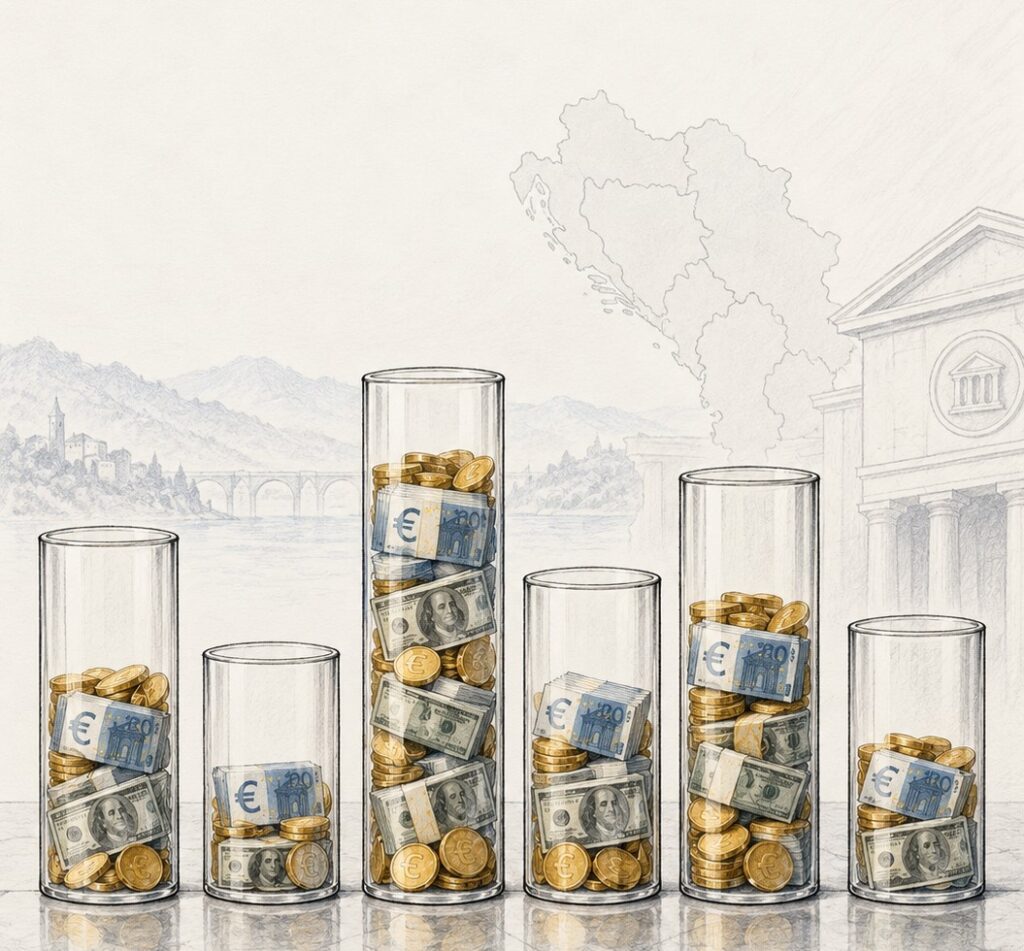


The Western Balkan countries (WB6) held a combined total of around $61.7 billion in international reserves in 2025, according to data from the International Monetary Fund (IMF), but more than half of the total is concentrated in Serbia. The IMF indicator used is total reserves, with gold valued at market prices, expressed in millions of US dollars.
Serbia stands out by a wide margin from the other countries in the region. At the end of 2025, its reserves reached around $34.15 billion, an annual increase of about 12%. At this level, Serbia holds around 55.4% of the WB6’s combined reserves, more than the other five countries put together.
Bosnia and Herzegovina ranks second, with around $9.42 billion. Only for Bosnia do the data refer to 2024, while the other countries have figures for 2025. Bosnia’s reserves account for around 15.3% of the total calculated for the region.
Albania ranks third in the WB6, with total reserves of around $8.60 billion in 2025, up from $6.52 billion in 2024. Within a year, reserves increased by around $2.09 billion, or 32%, the highest percentage increase among the five countries in the region for which complete 2025 data are available. Albania accounts for around 13.9% of the six countries’ combined reserves.
Albania is followed by North Macedonia, with around $5.80 billion in reserves in 2025. Compared with $5.25 billion in 2024, the stock of reserves increased by around 10.5%. North Macedonia accounts for around 9.4% of the total calculated for the WB6.
Montenegro held around $2.20 billion in reserves in 2025, up from $1.74 billion a year earlier. The annual increase was around 26.1%, the second highest after Albania among the countries for which data are available for both years.
Kosovo ranks last, with around $1.52 billion in reserves in 2025, up from $1.31 billion in 2024, or an increase of around 15.7%.
Albania leads the region in import coverage by reserves
Albania has the highest level of import coverage by foreign exchange reserves among the Western Balkan countries, maintaining a relatively strong position against potential external shocks.
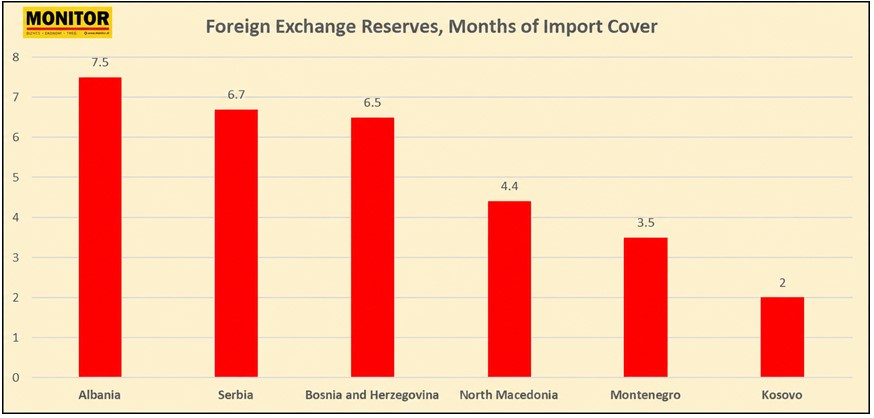
According to the latest available data for the WB6 countries, Albania’s foreign exchange reserves are sufficient to finance around 7.5 months of imports of goods and services, the highest level in the region. Albania is followed by Serbia, where reserves cover around 6.7 months of imports, while in Bosnia and Herzegovina the figure is around 6.5 months.
North Macedonia is at a lower level, with reserves sufficient to cover approximately 4.4 months of imports. For Montenegro, coverage is estimated at around 3.5 months of imports, but the country uses the euro as its currency and does not have a national currency, which makes the structure of its reserves different from that of the region’s other economies.
Kosovo ranks last, with reserves equivalent to around two months of imports.
Foreign exchange reserves are one of the main financial buffers protecting an economy against external shocks. They are managed by the central bank and are held mainly in foreign currencies, securities, gold and other international assets.
One of their main functions is to ensure a country’s ability to finance imports and meet external obligations, even during periods when foreign currency inflows into the economy decline. For this reason, reserve adequacy is often measured by the number of months of imports they can cover.
Reserves also serve as an instrument for maintaining exchange-rate stability. In the event of sharp fluctuations in the domestic currency, the central bank can intervene in the foreign exchange market by buying or selling foreign currency.
An adequate level of reserves also strengthens investor and financial-market confidence, as it shows that a country has the capacity to withstand potential crises, meet external debt payments or cope with temporary shortages of foreign currency.
In Albania, foreign exchange reserves are particularly important for maintaining financial stability, given the widespread use of the euro in lending, savings and transactions across the economy./ B. Hoxha
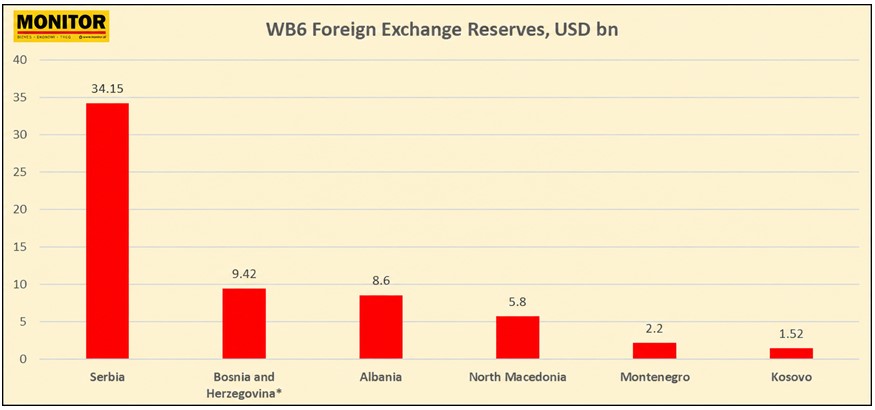
Source: IMF; Bosnia*: 2024 data
Source: IMF; Bosnia*: 2024 data
Ky është artikull ekskluziv i Revistës Monitor, që gëzon të drejtën e autorësisë sipas Ligjit Nr. 35/2016, “Për të drejtat e autorit dhe të drejtat e lidhura me to”.
Artikulli mund të ripublikohet nga mediat e tjera vetëm duke cituar “Revista Monitor” shoqëruar me linkun e artikullit origjinal.